Earthquake Basics Explained

An earthquake occurs when there is a sudden movement of the Earth’s crust due to heat underneath the surface that causes a sudden release, shaking the ground and creating fractures in the rock and fault lines.

Earthquakes are natural phenomena that occur in part due to the presence of humans who affect the Earth’s balance and can stimulate such incidents. For example, mining operations near faults, underground nuclear trials or building a reservoir near faults can trigger a quake. More simply, they can be caused by the operation of heavy machinery, or even traffic. However, those quakes will be less severe than those that occur due to nature, such as those caused by volcanic eruptions.

So what causes an earthquake exactly?

They are caused naturally by a sudden movement of tectonic plates along faults such as volcanic eruptions, which cause the collapse of underground cavities, as well as landslides or large meteors crashing into the Earth.

Why do earthquakes occur in Thailand?

There are two main reasons:

1. If a powerful earthquake occurs in another country, it can affect Thailand. The centers of most earthquakes in the region are found in the southern part of the Republic of China, Lao PDR, Myanmar, as well as in the Andaman Sea and northern Sumatra. The areas in Thailand that are most often affected include the North, South, West, Northeast and Bangkok.

2. An earthquake in Thailand can occur due to a problem along the fault lines that lie in the northern and western parts of the country. These include: Chiang Saen Fault, Mae Tha Fault, Phrae Fault, Thoen Fault, Mei Uthai Thani Fault, Sri Sawat Fault, Chedi Sam Ong Fault and Khlong Marui Fault.

Hotel cancellations reported in Chiang Rai after tremor

The Tourism Authority of Thailand (TAT) has revealed that the recent earthquake in Chiang Rai is causing safety concerns among tourists as several hotels have been faced with room cancellations.

As the epicenter of the 6.3-magnitude quake was located in Chiang Rai, the TAT Northern Office has admitted that the disaster is taking a toll on tourism businesses in the northernmost province. About ten local hotels have reported more than 40 room cancellations so far following the incident. Chiang Rung Hotel in Phan district has also announced temporary closure for renovation in order to ensure customers’ safety after sustaining structural damage from the quake.

However, tourism activities reportedly go on as usual in other quake-hit provinces, such as Chiang Mai, Lamphun, Lampang, Phrae, Nan and Uttaradit. No effects have been seen on major tourist attractions in those provinces while roads remain passable despite some damages.

Meanwhile, the TAT Chiang Rai Office noted that some of the room cancellations were made by tour groups. The office said the hotel occupancy rate in the province stood at 40 percent during the first three months of this year and declined to 20-25 percent in April when the low season began. In the wake of the recent earthquake, it is feared that the disaster would pull the occupancy rate down further in May.

5 May 2014 Northern Quake Assistance Committee is set up to aid quake victims

The Deputy Prime Minister Plodprasop Suraswadi has acknowledged that the Chiang Rai earthquake was Thailand’s most severe. Aftershocks registering 5 on the Richter scale are expected for at least 3 days. The cabinet has set up the May 5, 2014 Northern Quake Assistance Committee, of which the deputy prime minister is himself chief commander. The main purpose of the assistance committee is to give instant aid to the victims and to complete an assessment of damage to both lives and assets within 15 days.

Moreover, the cabinet has prepared a contingency budget to assist the local people while preparing a management plan in readiness for any national disaster that might happen in the future.

Tour bus passengers required to wear seat belts starting May 11

pneco570507001000201_07052014_102531The Department of Land Transport is reminding tour bus passengers to fasten their seat belts when seated, with the enforcement date of a penalty looming near.
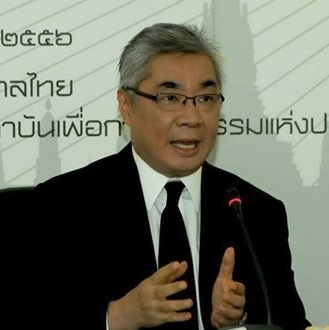
Department director-general Atsa Thairattanadilok Na Phuket visited Mochit bus terminal in Bangkok on Tuesday to make sure stickers publicizing the new regulation were being pasted up at the bus terminal. According to Mr. Atsa, the department has required, since April 1, that seat belts be available for every seat of every tour bus. The department has asked the Transport Ministry to issue a ministerial regulation requiring that passengers must fasten their seat belts at all times while seated. The regulation will take effect on May 11, and violators are subject to fines of no more than 5,000 baht.

According to Mr. Atsa, some passengers refuse to wear their seat belts despite continued promotion of the benefits of the device. Based on research conducted in Thailand, passengers who did not wear seat belts were 1.52 times more likely to die from road accidents than those who wore their seat belts. Seat belts have also been found to reduce the rate of fatalities in road accidents by 34%.

Passengers may report any lack of seat belts on coaches at the 24-hour hotline 1584.

Cabinet names new Justice Perm Sec

pnpol570506001000401_06052014_064703The Cabinet has removed Mr Kittipong Kittayarak from his post as Permanent Secretary for Justice and appointed Mr Thongthong Chandrangsu as his successor.

Justice Minister Chaikasem Nitisiri revealed that the Cabinet today resolved to transfer Permanent Secretary Kittipong to the post of Prime Minister’s Advisor, which was held by Lt Gen Paradorn Pattanathabutr. As a result, Lt Gen Paradorn was moved to the post of Permanent Secretary for the Prime Minister’s Office, replacing Mr Thongthong Chandrangsu who was then named the new Justice Permanent Secretary, replacing Mr Kittipong.

Although Mr Kittipong had been a supporter of the political reform movement by the People’s Democratic Reform Committee, Mr Chaikasem insisted that his transfer had no political motives. He clarified that Mr Kittipong’s term in the Permanent Secretary post had come to an end as he had been in office for as long as six years.

The Justice Minister also said the outgoing Permanent Secretary had requested the transfer himself and the Cabinet only granted him his wish.

DDPM: 8 provinces in North at risk of quake-induced landslides

As the North is predicted to experience more aftershocks, coupled with heavy rains, the Department of Disaster Prevention and Mitigation (DDPM) has urged eight provinces in the region to watch out for possible landslides.

DDPM Director-General Chatchai Promlert reported that thunderstorms and heavy downpours were in the forecast for many areas of the northern region during this period. He said the wet condition would soften the soil and bring about risks of landslides, especially when the region was undergoing a series of aftershocks following the 6.3-magnitude earthquake on Monday.

Based on the assessment, Mr Chatchai indicated that landslides were likely to occur in eight provinces, namely Lampang, Lamphun, Mae Hong Son, Chiang Mai, Chiang Rai, Phayao, Phrae and Nan. Therefore, the DDPM has instructed its office in each province to be on a lookout for such disasters.

In addition, the department is coordinating with relevant agencies to inspect the conditions of roads, reservoirs, historical sites and natural tourist attractions throughout the quake-prone region in a bid to ensure their integrity in case of more tremors. If their conditions are found to be unsafe, people will be informed to avoid being in their vicinity while repair efforts will be launched promptly.

Chainat continues the sustainable management of rice products

Chai Nat Province is continuing the sustainable management of rice products.

The Director of the Chai Nat Agriculture and Cooperatives authority reports that its Ministry has announced appropriate agricultural zoning in the province which includes rice, cassava, sugar cane, and corn. Agriculturists have become more interested in growing rice than corn since rice produces a higher income than corn.

Chai Nat Province has continued the 2014 sustainable rice management project in order to restructure its rice production to suit the provinces’ soil and water resources.

Joint committee to propose VAT, income taxes remain steady for 2 more years

PNECO570507001000101_07052014_102751.jpgThe Joint Standing Committee on Commerce, Industry and Banking revealed on Tuesday it will make suggestion to the government that it keep the VAT and income tax rates steady for two more years, to counteract the slowing economy.
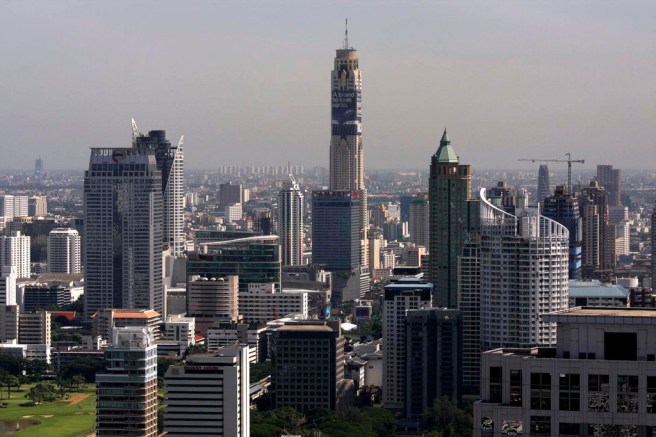
The committee, which comprises the Federation of Thai Industries, the Chamber of Commerce and the Thai Bankers’ Association, indicated that for two more years after the upcoming expiry of the rates in December, the value added tax rate should be kept at 7 percent and juristic person income tax should remain at 20 percent, while normal income tax rates should also be kept unchanged.

According to the committee, economy has been growing at a slower pace as a result of the political turmoil that has dragged on for more than 6 months; certain growth figures in the first quarter have already hit negative territory. If the political situation resolves quickly, within June, the economy will expand by 2.5-3% this year. If the situation prolongs until the end of the year, the expansion will only be between 1-2%. If violence breaks out, there is the possibility that economic growth might be negative.

The committee said it would make the suggestions to the government within this week.

EIT says older high rise buildings in Bangkok should be checked after tremors

PNDAT570507001000101_07052014_102546.jpgHigh-rise buildings in Bangkok that were constructed before 2007 should be inspected, after Monday’s earthquake in Chiang Rai sent tremors that were felt in Bangkok, said the Engineering Institute of Thailand (EIT).
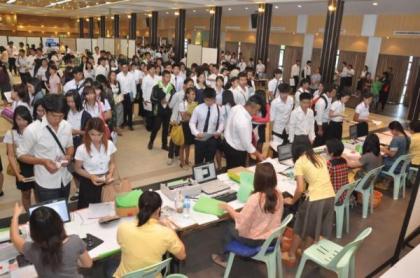
EIT president Suchatchawi Suwansawat explained that because the epicenter of Monday’s earthquake in Chiang Rai was only 7 kilometers deep, the earthquake was practically the most severe that has ever occurred in Thailand. He called on state agencies and people in Phayao, Chiang Rai and Lampang – provinces located along the fault line responsible for the recent quake – to closely monitor the situation until the end of Wednesday. With thunderstorms being rampant during this period, he also urged for structures situated on the hills to be checked and vigilance be exercised against landslides, in areas within a 50 kilometer radius of the epicenter in Phan district.

Regarding high-rise buildings in Bangkok, Mr. Suchatchawi said there were no worries over the buildings constructed after 2007, as they were designed to withstand magnitude 7 earthquakes. However, earlier buildings that had 7 to 10 stories should have their structures inspected.

Unemployment rate among new graduates expected to rise this year

pnsoc570506001000101_06052014_044948Economic woes have affected Thais from all walks of life, from those at the grassroots level to people of prominent social standing. However, the group most at risk are new graduates, who face a lot of uncertainty in their personal future and the search for gainful employment.

Poll results indicate the unemployment rate among new graduates is expected to increase, up to a point where 50 percent would be jobless immediately after they receive their diplomas. Adding to the poor prospects, employment rates across the country have also dropped as a result of business closures and sluggish investment.

The Department of Employment has estimated that in 2014, there would be at least 547,800 people entering the workforce, and around 336,900 of them would be Bachelor’s Degree graduates, who account for 61.5 percent of job applicants.

Meanwhile, the Federation of Thai Industries (FTI) predicts that the number of new graduates will outnumber the positions available in many companies by about 50 percent. From this figure, the FTI predicts that at least 150,000 graduates would be unable to find jobs as they try to enter the workforce.

Lastly, the Thailand Development Research Institute (TDRI) has forecast that Thailand’s GDP will only grow between 2.5 to 2.7 percent this year. It has also predicted that unemployment rates will reach 1.0 to 1.2 percent in 2014 across the country, considerably higher than last year’s rate of 0.8 percent.